The 2027 South Dakota Legislature will have 93 Republicans and 12 Democrats:
| Elected Apportionment of 2027–2028 SD Legislature |
|||
| Party | Senate | House | Total |
| GOP | 33 | 60 | 93 |
| Dem | 2 | 10 | 12 |
| Total | 35 | 70 | 105 |
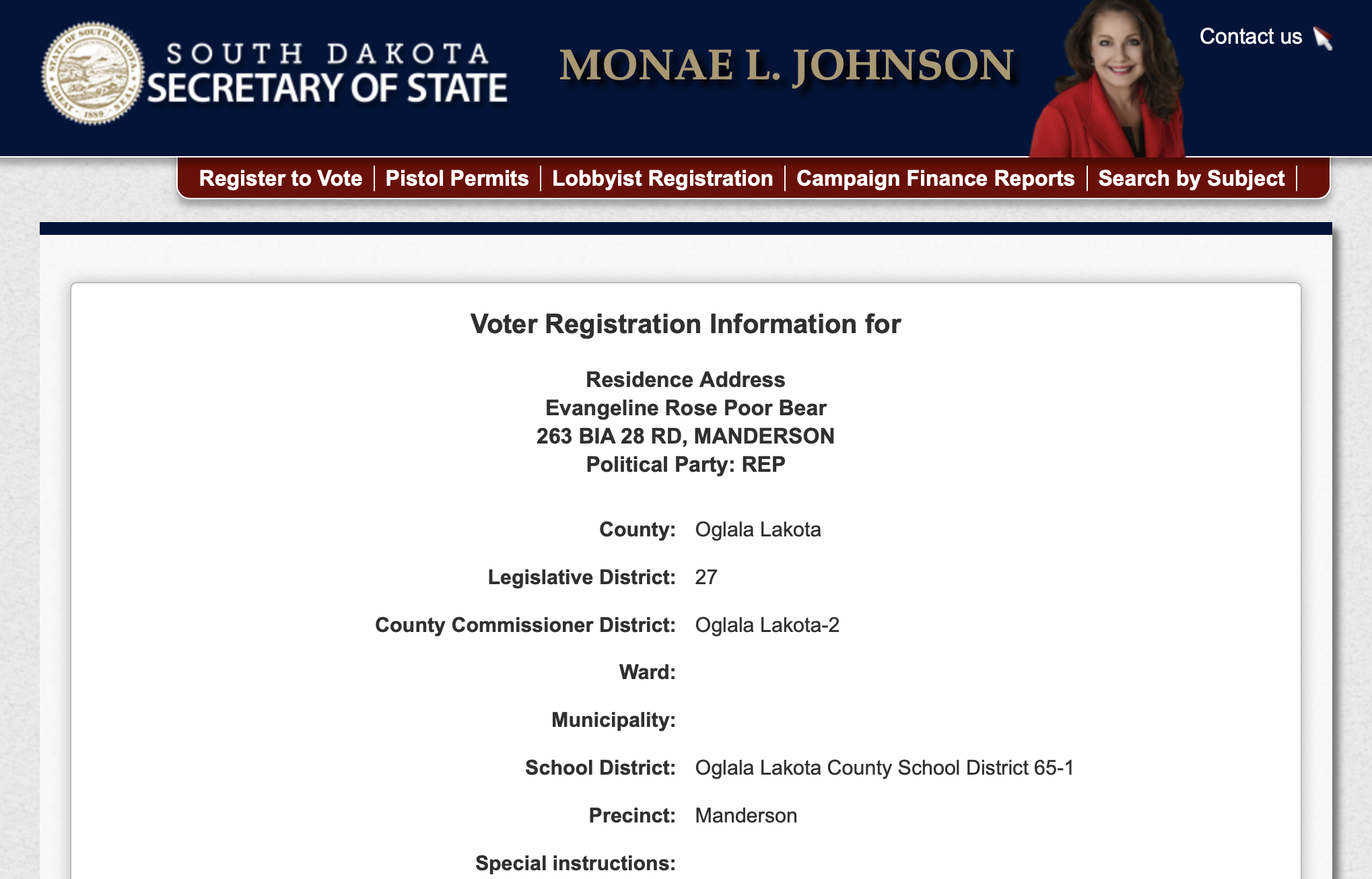
I am counting District 27’s Representative-Elect Evangeline Poor Bear in the GOP column, as she is a registered Republican. Poor Bear appeared as an “independent” on the general election ballot but told South Dakota Searchlight that she ran indy because she missed the March 31 partisan filing deadline.
As usual, the South Dakota Legislature skews far to the right of the partisan distribution of South Dakota registered voters. Republicans make up 52.8% of South Dakota’s registered electorate; independents, 25.1%; Democrats, 21.5%. But Republicans get 89% of the seats in the 2027 Legislature, Democrats get 11%, and independents get none.
A Legislature that reflected the actual party identification or lack thereof of South Dakota’s registered voters would still have slim Republican majorities in each chamber but more meaningful competitive blocs of Democrats and independents:
| Fantasy apportionment of 2027–2028 SD Legislature, based on statewide voter registration by party, November 2026 | |||
| Party | Senate | House | Total |
| GOP | 18 | 37 | 55 |
| Dem | 8 | 15 | 23 |
| Ind | 9 | 18 | 27 |
But if you want those seats, you have to show up at the polls and vote, and a disappointing majority of South Dakota’s voters sat out this election. Statewide, 80% of votes cast in Senate races and 73% of votes cast in House races went to Republicans.
The following tables show the actual votes cast for Senate and House candidates statewide in this general election:
| Senate | Votes | Vote% | PropSeats |
| GOP | 188,506 | 79.76% | 27.92 |
| Dem | 38,562 | 16.32% | 5.71 |
| Ind | 9,259 | 3.92% | 1.37 |
| House | Votes | Vote% | PropSeats |
| GOP | 321,166 | 73.11% | 51.17 |
| Dem | 104,933 | 23.89% | 16.72 |
| Ind | 13,218 | 3.01% | 2.11 |
If we assigned Legislative seats based on that expressed party preference statewide, we’d get a Senate and House with allotments between the actual elected representation and my fantasy allotment proportional to voter registration:
| Fantasy apportionment of 2027–2028 SD Legislature, based on total votes cast statewide in Senate and House races in the 2026 general election. | |||
| Party | Senate | House | Total |
| GOP | 28 | 51 | 79 |
| Dem | 6 | 17 | 23 |
| Ind | 1 | 2 | 3 |
But those figures, especially the Senate numbers, are skewed by absence of full slates of Democratic and independent candidates in most districts. Republicans ran unchallenged in 21 Senate races. Nearly 127,000 of the votes cast for Republican Senate candidates, two thirds of the Republicans’ statewide Senate total, were cast by voters who had only that one Republican name on their Senate ballot. In the 14 Senate races where voters had actual choices, Republicans won 56% of the vote; Democrats, 35%; and “independents”*, 8%. That 56%–35% split in contested Senate seats was close to the 62%–37% split in the average votes won by the main parties’ statewide candidates.
Proportional representation, reflecting different political subgroups in elected assemblies based their overall vote totals, is used in dozens of countries. Applied in South Dakota, proportional representation would put more Democratic and independent voices in the Legislature. But just like our winner-take-all system, the fairness of proportional representation depends on parties and independents showing up with candidates in each contest and on voters showing up in force at the polls.
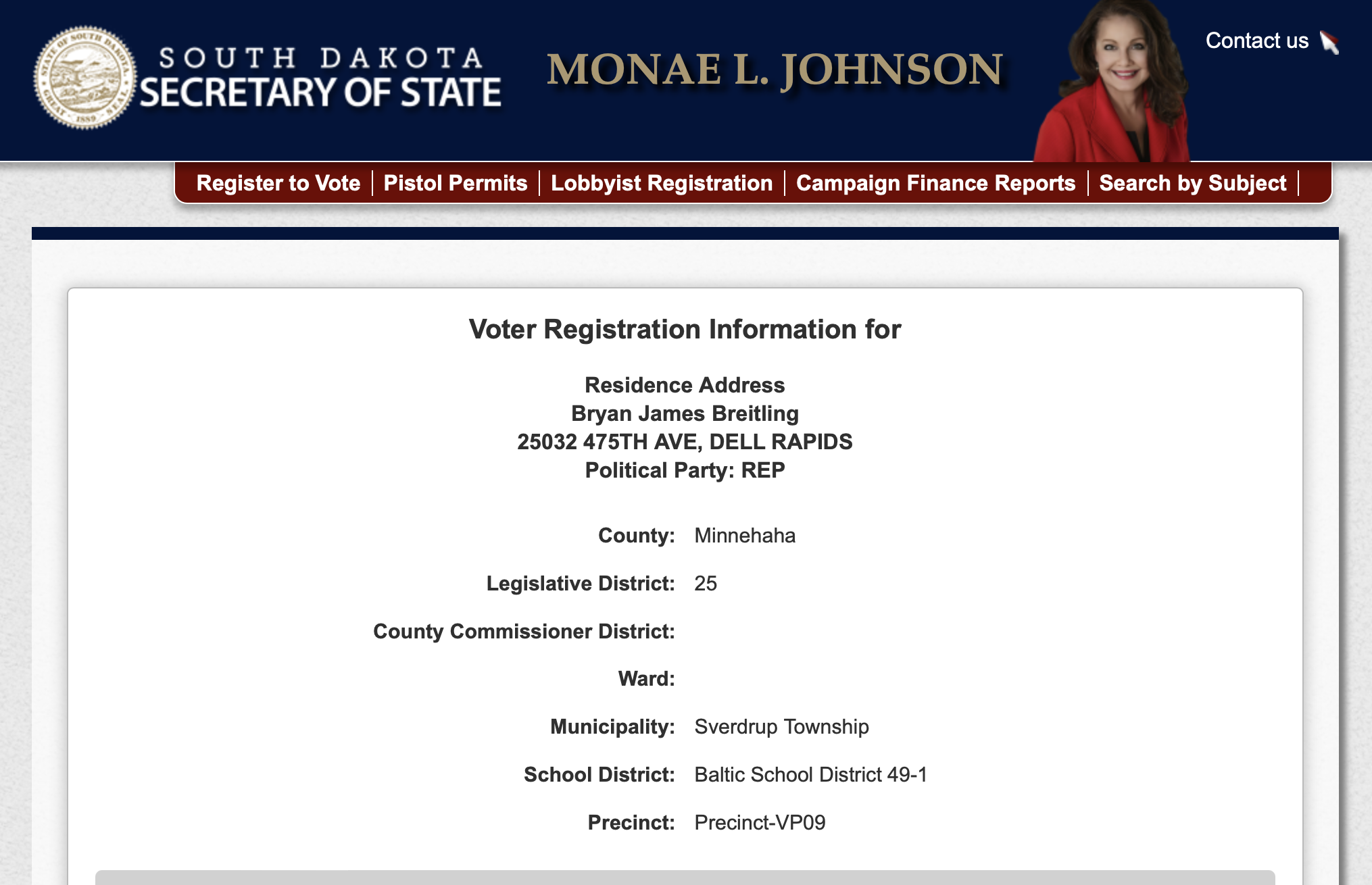
*I’m mock-quoting the indies here, too, because one of the three nominal indies was former Republican legislator Bryan Breitling, who fronted the GOP establishment’s amazingly unsuccessful effort to wrest the District 25 Senate seat from the radical mugwumps of their own party. Per Secretary Johnson, Breitling is a registered Republican:
Head-twister, Cory! Thanks for that exercise!
This is what the subtle and insidious gerrymandering of the past forty years will do for you.
I say this as a person who was in south Rapid District 32, and a few years ago found myself and a thin strip of my neighbors peeled out of District 32 and connected by an artificial curved moat of bramble and ravine to our near neighbors in far-off District 33 in northwest Rapid. I absolutely could not care less about District 33 neighborhood issues and candidates, and can only think that people wanted to damage and cannibalize District 32 in some way.