The South Dakota Wheat Growers have posted their national outfit’s gloomy forecasts for increasing production costs.
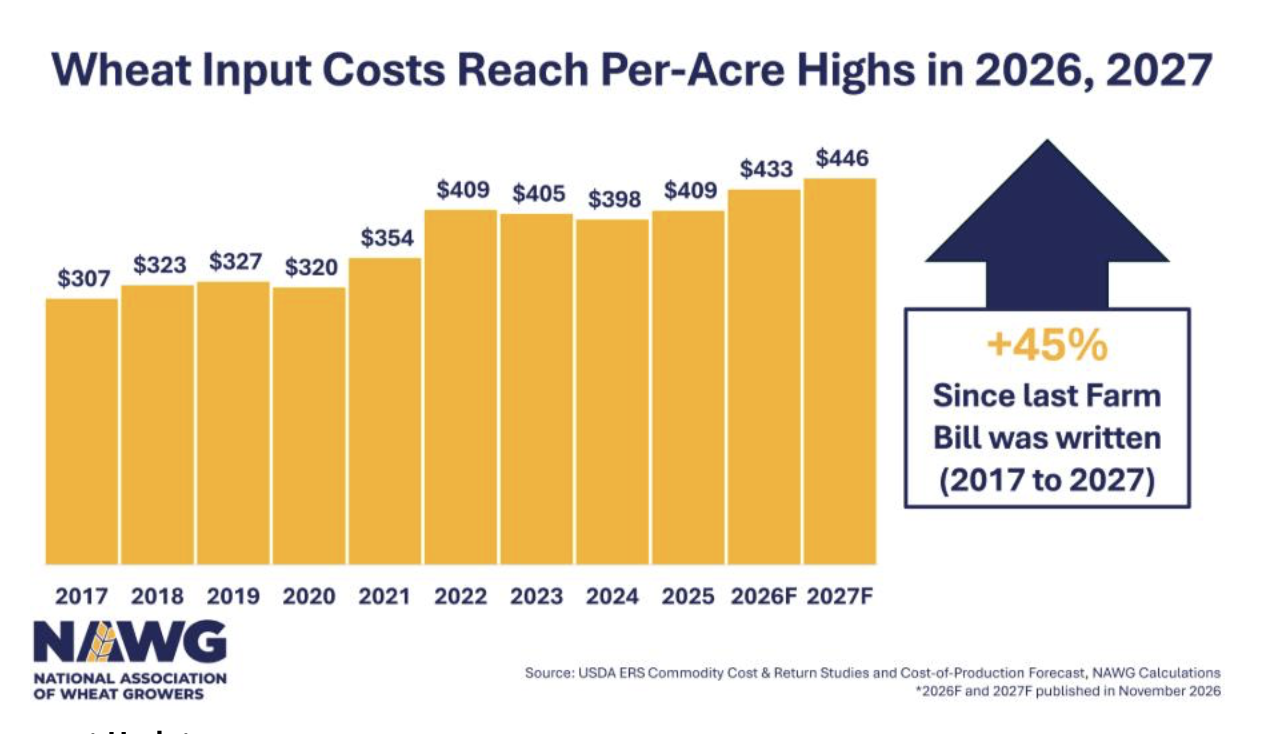
Wheat input costs spiked in 2022 after covid and Russia’s invasion of Ukraine snarled global supply chains. Those costs eased through 2024, then matched the 2022 spike in 2025 and have climbed ever since:
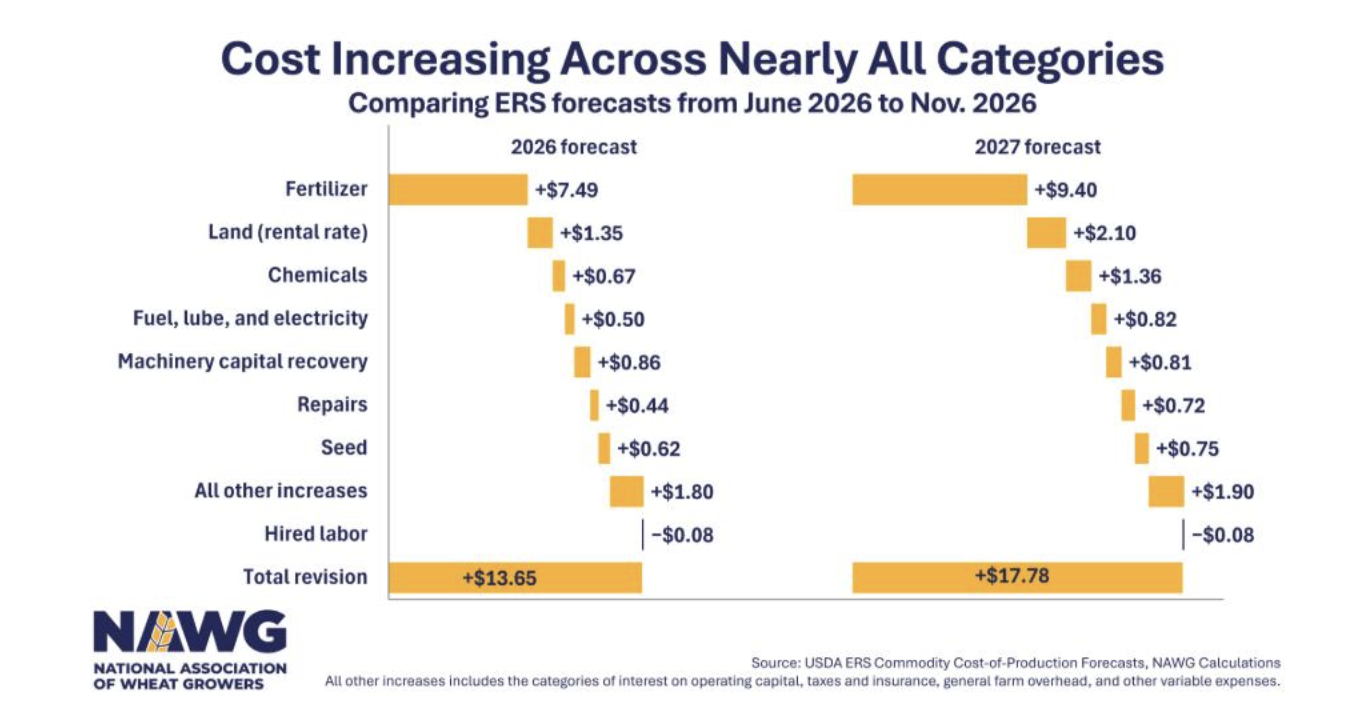
More than half of the increased cost of growing wheat comes from fertilizer:
…and we all know what makes fertilizer cost more, right?
The USDA estimates are catching up to a fact that farmers already know: crop inputs continue getting more expensive, outpacing inflation in recent years. Wheat farmers in particular feel the impacts of global conflict and market shifts, as out of all major field crop categories wheat growers must allocate the highest percentage of their operating budget to fertilizer costs. In 2026 (42.1%) and 2027 (41.4%), the percentage of wheat growers’ budgets that will be allocated to fertilizer is forecasted to be the second and fourth highest for wheat as a percentage of input costs all time, narrowly behind 2022 (44.4%) and 2008 (41.8%) [emphasis mine; SDWGA, 2026.11.19].
Global conflict and market shifts—that’s industry code for Trump’s unnecessary, ill-planned war on Iran and tariffs on everybody.
Trumpflation means most wheat growers won’t break even this year:
In 2026 and 2027, at the current USDA projected average wheat price of $6.20 per bushel for the 2026 crop year, a farmer would need to yield approximately 70 bushels per acre to breakeven. Unfortunately, that is a tall task – as the record national average yield, set in 2025, is only 53.3 bushels per acre [SDWGA, 2026.11.19].
We might get a farm bill out of the lame-duck Congress. But the new Democratic majority could render swifter aid to wheat growers and everyone else in South Dakota trying to put food on tables by shutting down both the Iran war and the trade war.