Last updated on 2026-03-08
The South Dakota House came to its senses Wednesday and refused to let the Senate dupe them into giving the Senate an extra privilege. After a lively debate (starting at timestamp 1:42:22 of the SDPB video of the Wednesday, March 4 meeting of the House) mixing institutional pride, attempts at constitutional wisdom, personal gripes, malarkey, and some of the anti-democratic sentiment we’ve come to expect from the Legislature, the House rejected Senate Joint Resolution 508, which would have placed on the statewide November ballot a constitutional amendment to get rid of the only duty the South Dakota Constitution gives to the Lieutenant Governor, presiding over the Senate.
Representative Leslie Heinemann (R-25/Flandreau) led off debate on SJR 508 by arguing, among other things, that “I’ve continually heard complaints the Legislature is too beholden to the Executive Branch, that there need to be more autonomy from the Executive Branch. This bill would allow that”—i.e., this resolution would allow the people of South Dakota to decide if they want to allow that. Rep. Heinemann complained that the change the Legislature made last year to the process of selecting the Lieutenant Governor, moving the choice from the party convention to the gubernatorial candidate alone, leaves the Senate under the thumb of an unelected member of the Executive Branch rather than enjoying the privilege the House enjoys of electing its own presiding officer.
Rep. Chris Kassin (R-17/Vermillion) called SJR 508 an “egregious slap in the face to this institution”, suggesting that it places the whims of current members above respect for the enduring structure and wise guardrails of South Dakota’s framework of government.
Rep. Jack Kolbeck (R-13/Sioux Falls) spoke of his eight years in the Senate and his respect for the Lieutenant Governors who presided over his chamber. He said those Senate Presidents “had no vote… had no floor time, but they respected the position they held, they respected the people in the body, they respected the people in the state of South Dakota, and every bill, every bill, that was presented in my years got a fair hearing on the floor of the Senate. That’s why I respectfully ask you to vote no on SJR 508.”
Rep. Marty Overweg (R-21/New Holland) expressed his respect for everyone’s respect for the institution. he declined to urge a vote yea or nay, but he fondly recalled his fifth-grade teacher’s drilling of “the three branches of government, the checks and balances.” “I firmly think,” he continued, “having the branches of government completely separate, checking on each other, is the right way to go.”
Rep. Bill Shorma (R-17/Dakota Dunes) said, “I love change, but I respect functional tradition.” He said the Lieutenant Governor’s Presidency of the Senate works really well and urged his colleagues to leave it that way—i.e., not to let voters decide whether to leave it that way.
In a fit of illogic, Rep. Phil Jensen (D-33/Rapid City) led Rep. Heinemann through some ridiculous friendly questioning in which they asserted that the Lieutenant Governor is not elected by the people. Rep. Jensen raised hackles by reminding the House that it was “embarrassing when the presiding Lieutenant Governor at the time covered up Drunkfest 2020“. Jensen suggested that if the President of the Senate were an elected position, such misconduct would not happen…ignoring the fact that, in the covered-up scandal to which leaky Rep. Jensen referred, the President Pro Tempore and the Majority Leader whom the Senate elected both showed more signs of being stewed at the Capitol than did the bleary-eyed Lieutenant Governor who was present at their inebriation.
Rookie Rep. Erik Muckey (D-15/Sioux Falls) avoided all the juicy stuff and gently rebutted Jensen’s assertion by noting that the Lieutenant Governor is elected by the people alongside the Governor just as the Vice-President is elected by the people alongside the President. He further analogized the L.G. to the V.P. in Senate-presiding duty: “If that is the great tradition of our Democratic Republic, why are we changing it in South Dakota?” (Even the good Democrat from Sioux Falls needs to be reminded that SJR 508 is asking the voters of South Dakota to change that esteemed tradition.)
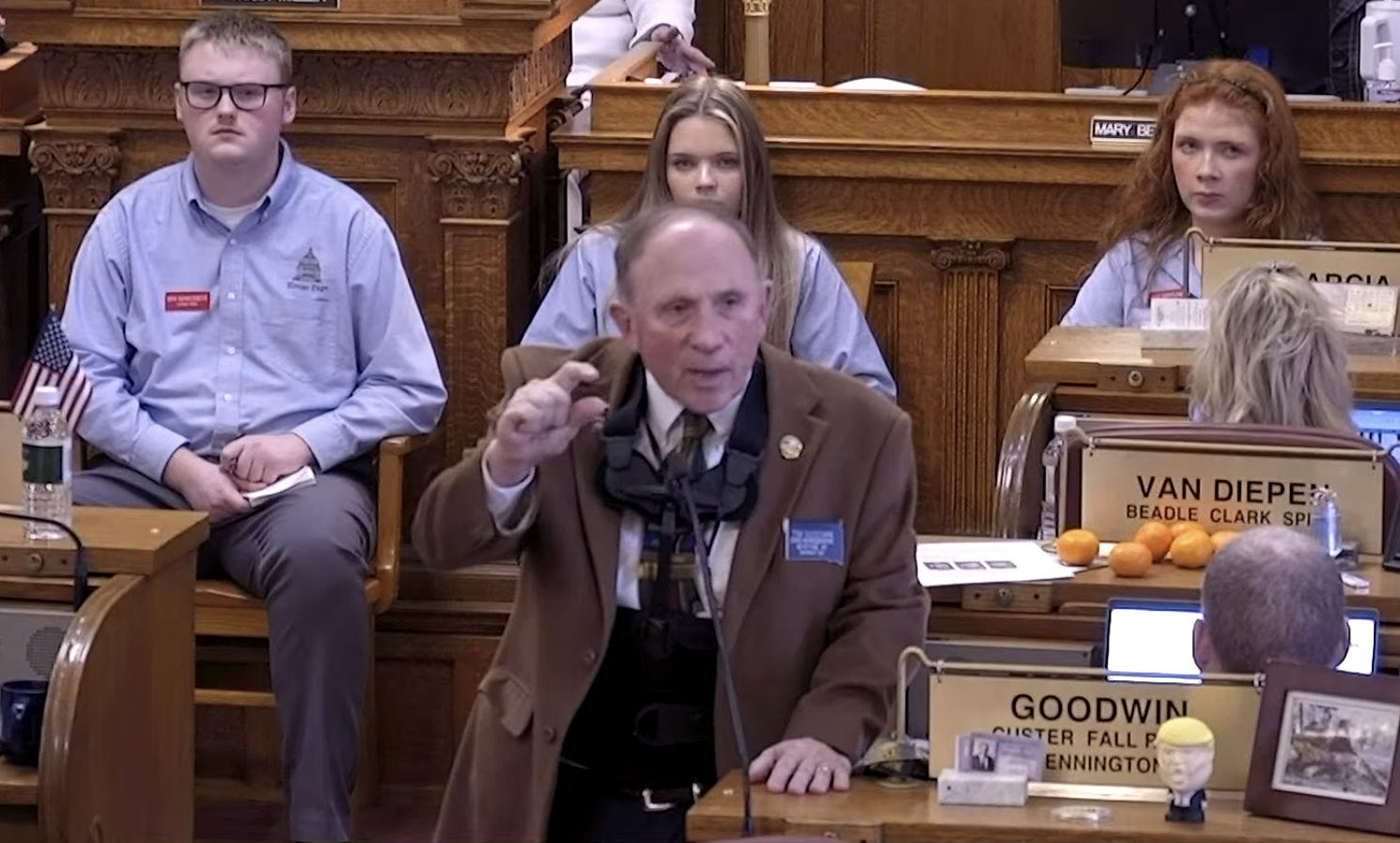
Speaking next to the Trump bobblehead on his desk, Rep. Tim Goodwin (R-30/Rapid City) made the ridiculous claim the Legislature drives people away from voting by putting things on the ballot and making them feel stupid. He indicated falsely with repeated gestures that measures like SJR 508 create inch-thick ballots. He alleged that voters are barely smart enough to mark candidates’ names.
Gee, Tim: if voters are that stupid, maybe you should do them a favor and offer an amendment to eliminate the House and make the Legislature unicameral. That would thin up the ballot, reducing the number of candidates for legislature by two thirds!
Rep. Keri Weems (R-11/Sioux Falls) also lamented the Legislature’s frequent placement of constitutional amendment on the ballot. She implied that the founders of the state constitution were wiser than current thinkers and voters. She did helpfully suggest that the other body’s failure to get along, maintain a full quorum, and avoid ties does not justify changing the constitution.
Rep. Al Novstrup (R-3/Aberdeen) invoked James Madison as the father of this mingling of Executive and Legislative power and said he can’t argue with that. (Al’s AI-chatbot didn’t remind him that Madison also advocated for the U.S. House of Representatives to choose U.S. Senators from nominees submitted by state legislatures as well as for the U.S. Constitution’s provision for equality of the states in the Senate. South Dakota has no comparable provisions: the South Dakota House does not choose and county commissions do not nominate State Senators, and counties don’t each get two State Senators. If Novstrup can’t argue with Great Father Madison on the point of dispatching the second executive to preside over the Senate, how on earth does he argue with Madison on those much larger points of the election of Senators?)
Rookie Rep. Tim Walburg (R-8/Madison) asked colleagues to consider whether there’s really a systemic problem here or just something personal motivating SJR 508.
Rookie Rep. Bobbie Andera (R-10/Sioux Falls) friendlied Rep. Heinemann to reiterate the idea that the Legislature’s move last year to change the selection process of Lieutenant Governor from convention vote to Governor’s pick justifies changing the Senate Presidency, because the SDGOP convention far better expresses the voice of the people than the person the SDGOP picks for Governor (which is like saying the Politburo better expressed popular Russian will than Brezhnev did).
Rookie Rep. Matt Roby (R-6/Watertown) said nuts to that: the people still vote in November for L.G. just as much as they vote for G. He also raised the practical point—arguably the smartest and most novel point raised during the entire debate—that having a Senate President who serves a four-year term adds a bit more institutional knowledge into a process otherwise run by Senators who serve two-year terms.
Rep. John Hughes (R-Sioux Falls) rebutted the claim Rep. Andera and other SJR 508 backers have made that the convention change in L.G. selection somehow justifies the elimination of the L/G/’s only active constitutional function. Rep. Hughes said that change actually made South Dakota more like the national system in which ticket-toppers pick their running mates.
Rep. Heinemann closed debate by responding to various points raised by his esteemed colleagues. Responding to Rep. Walburg’s doubt as to whether SJR 508 addresses a real problem, Rep. Heinemann said the L.G.’s presidency is a “big problem” because “we had to have the Supreme Court enter into this discussion.” (Actually, the Supreme Court resolved the problem it was asked to decide, stating unequivocally that the South Dakota Constitution as written clearly confers to the Lieutenant Governor, as President of the Senate, the authority to vote to break ties on final passage of legislation in the Senate. SJR 508 claims a different problem, that the L.G. shouldn’t be presiding over the Senate in the first place.)
Rep. Heinemann said tradition can’t be a voting issue, because the Legislature changed tradition last year when it changed who picks candidates for L.G. He dismissed the idea that people still can choose not to vote for the lieutenant governor and his ticket-topping running mate: “How practical is that?… It’s the same way as with the Vice-Presidential candidate—how many are going to pick the President based on who the Vice President is?” (Well, Les, at least a couple million people in 2008.) He said it’s “a little bit on the ridiculous side” to say we vote for the running mate (which is like saying it’s a little bit on the ridiculous side to say that people voting for SJR 508 are voting for removing the L.G. from the Senate Presidency but aren’t voting for the Senate to elect its own presiding officer).
Rep. Heinemann said the most important reason he supports SJR 508 is to separate powers. But he concluded by dedicating more time to a new argument, that the minority party should get on board with SJR 508 as it would give them more say in choosing a presiding officer. I kind of like that argument: some fine day when Democrats retake the Senate, they may still be saddled with a Republican Lieutenant Governor who could not only break the ties on which SJR 508 focuses but also make parliamentary rulings from the chair that break for his agonized Republican minority. But purely Machiavellian/Carvillian Democrats could argue that the status quo suits their political gamesmanship just as well. There may be more chance that one charismatic Democrat will break through South Dakota’s red bias and win the Governorship than that 18 little Richard Kneips and Billie Suttons will emerge in the same year to win a Democratic majority in the Senate. There may thus be more chance (I’ll gladly take odds in the comment section) that a Democratic Lieutenant Governor could win a wonderful mischievous check on a Republican Senate under the status quo than that a Democratic Senate would be languishing under the thumb of a Republican presiding officer and saying, “Gee whiz, we shoulda voted for SJR 508 back in 2026.”
The five Democrats accepted my odds and voted for the status quo. So did 37 of the 62 present Republicans, thus stopping the suggestion that we eliminate the Lieutenant Governor’s only active constitutional role from going to a vote of the people. SJR 508 died on a 25–42 vote. While no House member dared mention what should have been top of mind for any jealous protector of House privilege, the House effectively neener-neenered the Senate—you Senators may think you’re better than us, but at least we get to pick our own presiding officer!
That neener-neener also killed the last of the eight ballot questions the 2026 Legislature considered putting to a statewide vote. The 2025 Legislature fielded eleven possible ballot questions—six Joint Resolutions from the House, five from the Senate—and placed four of them, two from each chamber, on this year’s ballot.
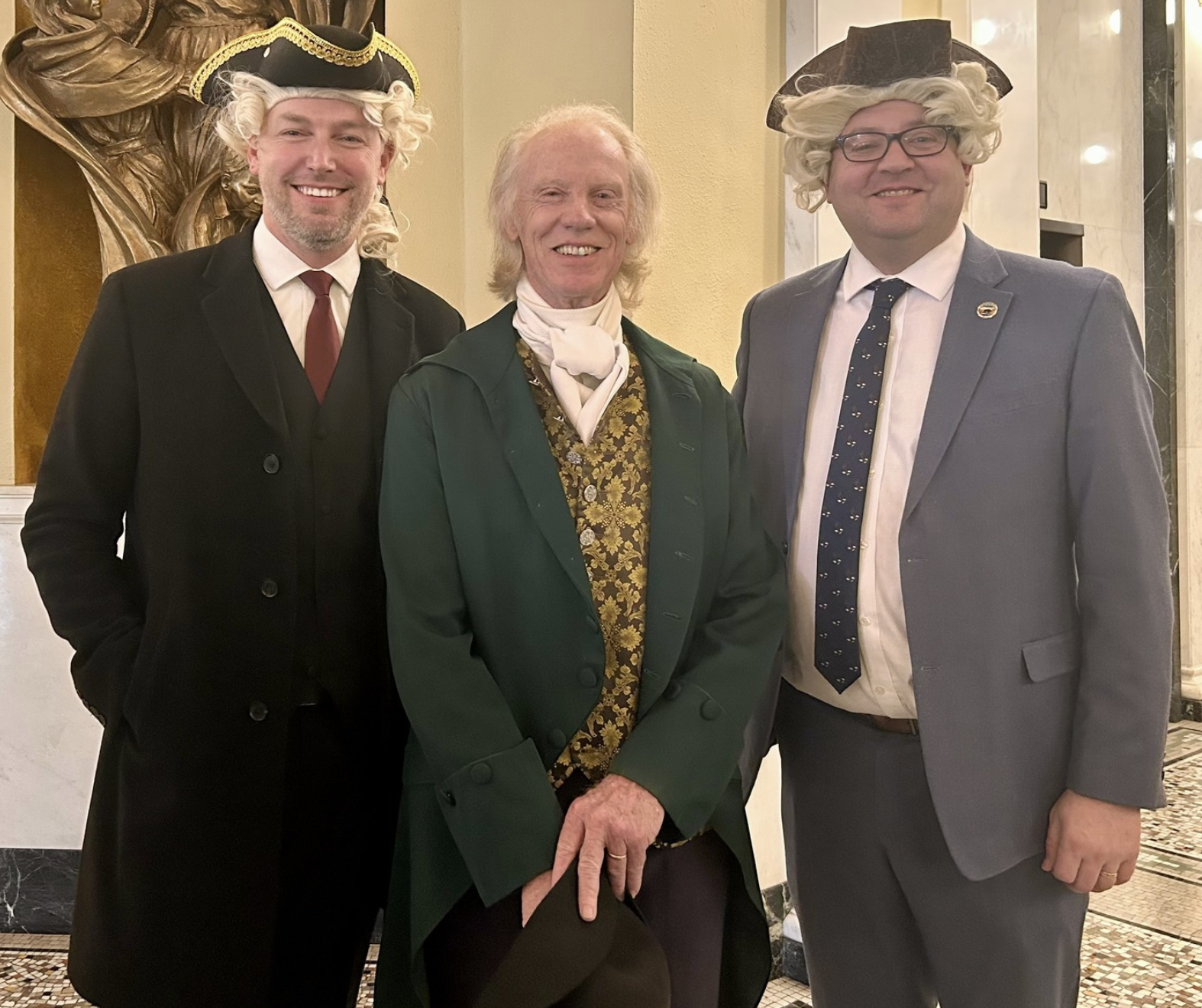
p.s.: Legislators may be tired of ballot questions, but maybe they could offer the defeated backers of SJR 508 a consolation prize: amend the Joint Rules to require presiding officers to wear fancy wigs.