South Dakota Retirement System beneficiaries are getting another cost-of-living increase that doesn’t match the increase in the cost of living:
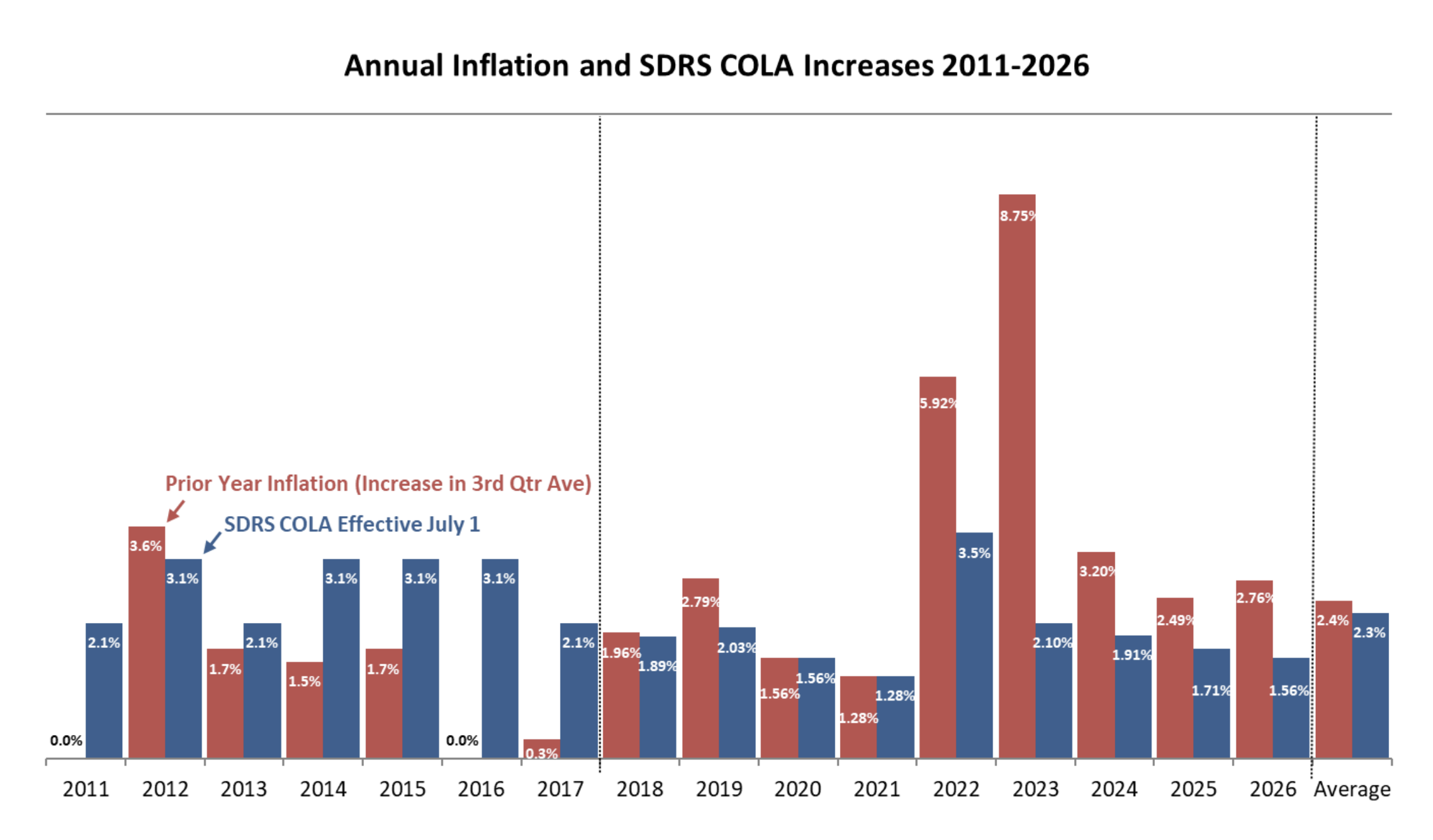
SDRS trustees on Wednesday approved a 1.56% cost of living adjustment that will take effect on July 1, 2026.
Factors for SDRS determining the COLA include the inflation rate during the preceding third quarter. Inflation in the third quarter of 2025 was 2.76%.
That means the 1.56% increase won’t reach the SDRS trustees’ standing goal that the COLA keep pace with inflation.
It will be the fifth consecutive year when inflation exceeded the COLA increase.
The 2025 COLA increase was 1.71%, while inflation was 2.49%.
The Legislature changed state law in 2010 to allow SDRS to use variable COLAs [Bob Mercer, “SDRS Recipients’ Next Increase Lags Inflation,” KELO-TV, updated 2025.12.11].
Since the Legislative change Mercer mentions, inflation has averaged 2.4% while SDRS COLAs have averaged 2.3%:
SDRS can’t crank out higher COLAs, because the market underperformed target growth:
SDRS executive director Travis Almond said retirees and other beneficiaries “probably don’t like it always, but they understand” that SDRS must try to stay 100% funded. “We don’t like to see their purchasing power slip away, either,” Almond said.
The board’s chair, Eric Stroeder of Mobridge, said the top priority is to finish each year fully funded. “If you get behind, it’s like a snowball effect,” Stroeder said. “It’s really important to keep this in balance.”
SDRS actuary Doug Fiddler said the mandatory contribution rates for employees and employers provide certainty for the budget that SDRS must work within.
Stroeder said not reaching the 6.5% annual investment target has led to smaller COLAs. Stroeder said people want the system to be strong and steady and reliably funded.
“They’re more committed to keeping this thing sound,” Stroeder said. He noted that many SDRS beneficiaries receive Social Security, and that offsets some of the financial concerns because Social Security is adjusted annually for inflation.
SDRS began fiscal 2025 with $14.922 billion of investment assets on July 1, 2024, and finished with $15.272 billion of investment assets on June 30, 2025. That 5.44% return was less than the 6.5% target.
Those assets are managed by the South Dakota Investment Office in Sioux Falls. Darci Haug, a senior investment officer, told the board on Wednesday that SDRS assets currently stood at around $15.6 billion, a 4 to 4.25% increase since July 1, 2025.
Fiddler, the SDRS actuary, said providing a full 3.5% COLA in 2027 would require investment gains of 13.6% or greater [Mercer, 2025.12.11].
SDRS analysts offer no public assessment of the extent to which tariffs and other kamikaze economic policies have raised retirees costs and reduced market returns, but we can figure that out on our own.
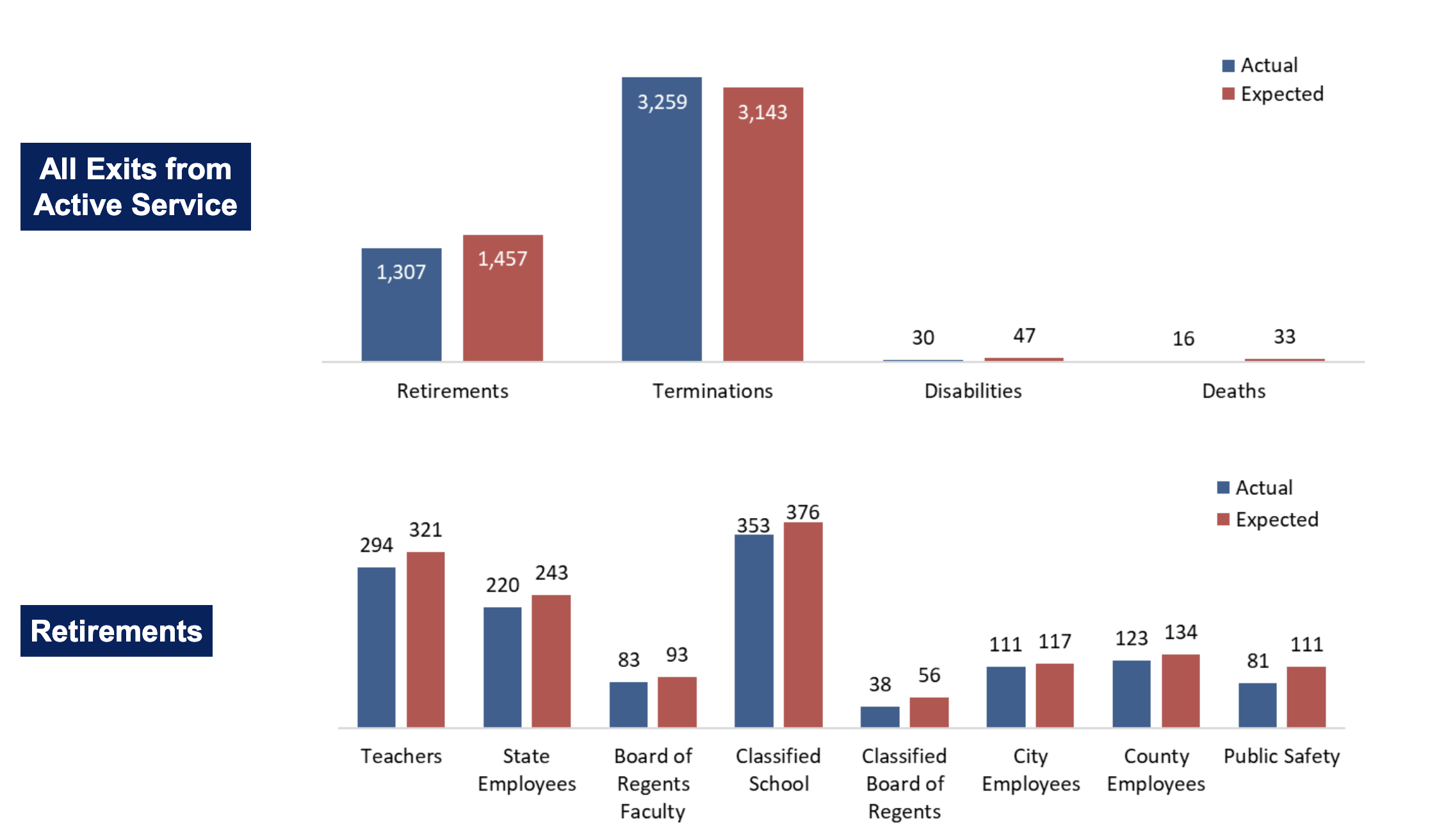
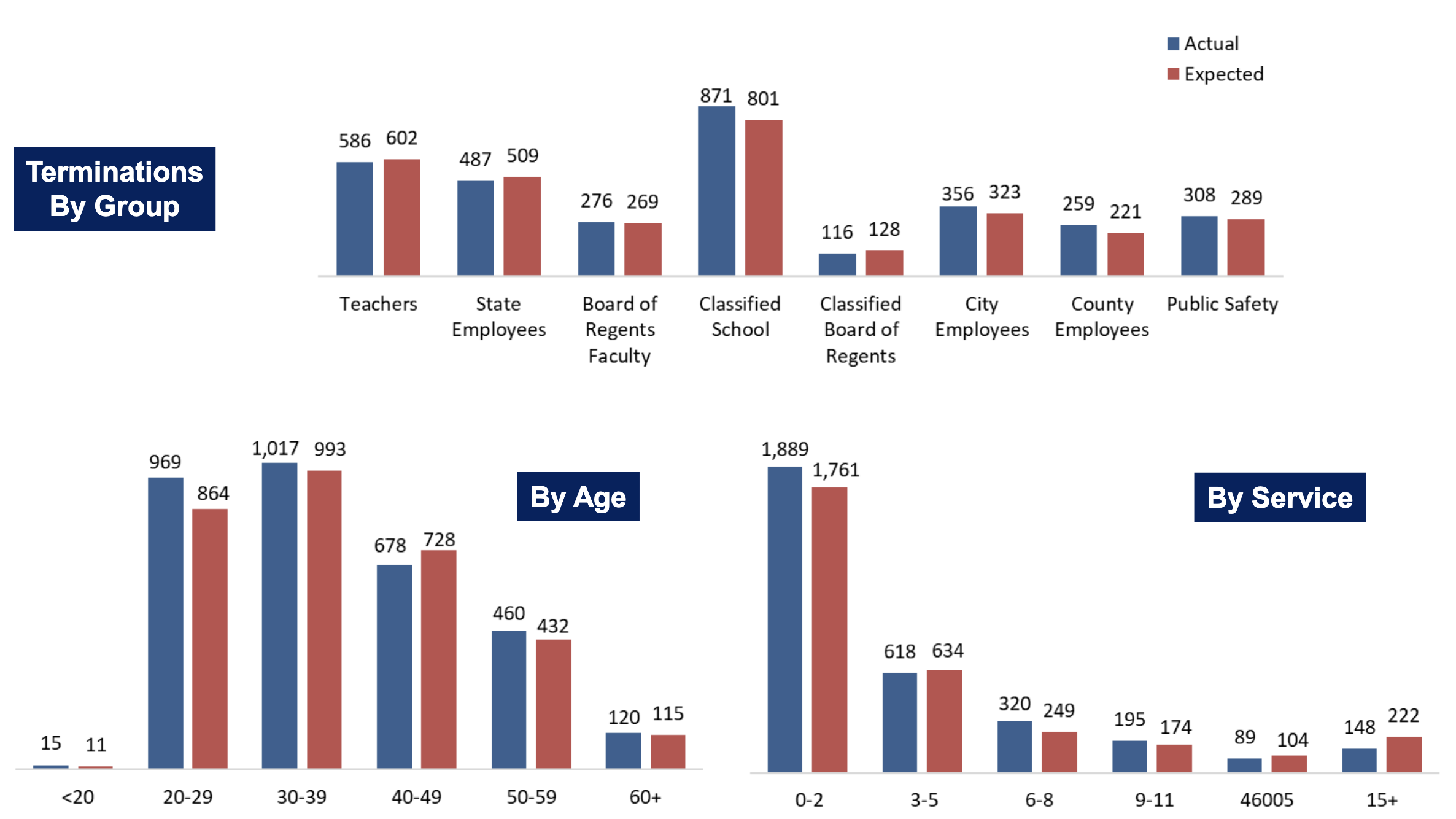
Wednesday’s SDRS slideshow is chock full of pension trivia. Fewer SDRS members retired than expected, but more workers than expected left jobs covered by SDRS and thus stopped paying into the system:
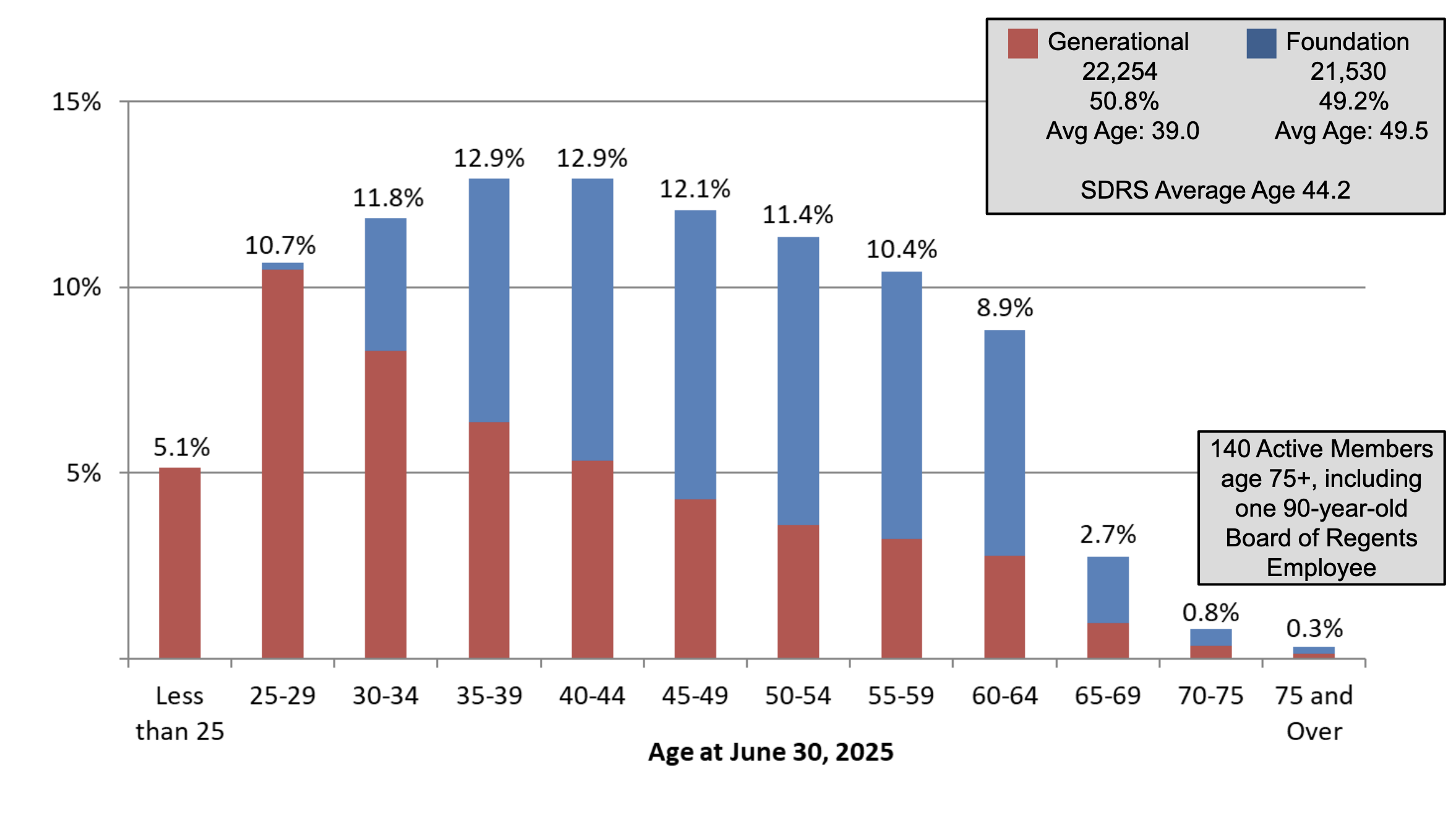
Among the 43,784 workers paying into the system are 140 people age 75 or older, including one hardy 90-year-old working for the Board of Regents:
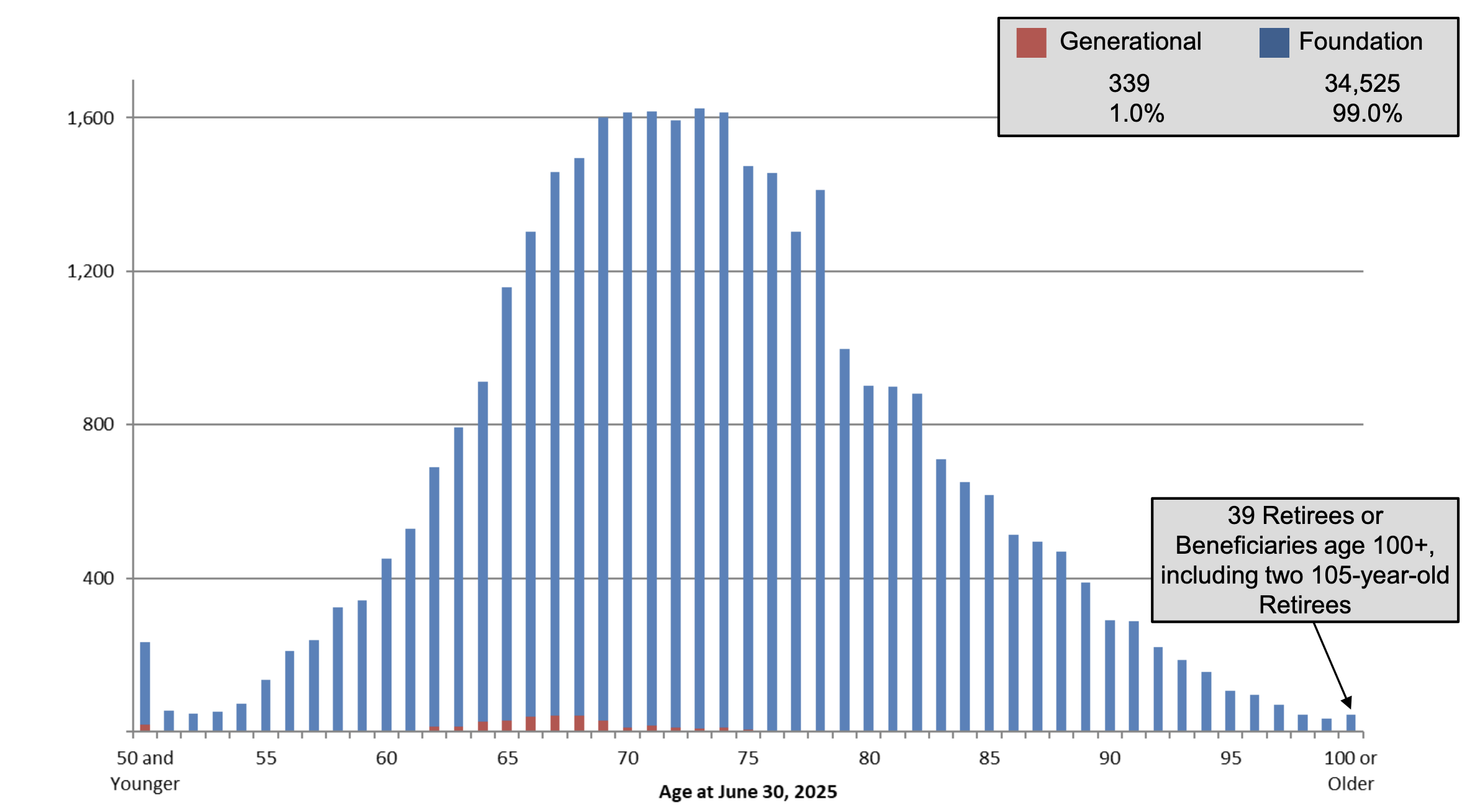
SDRS is writing monthly checks to 34,961 beneficiaries, the oldest of whom are two 105 year olds:
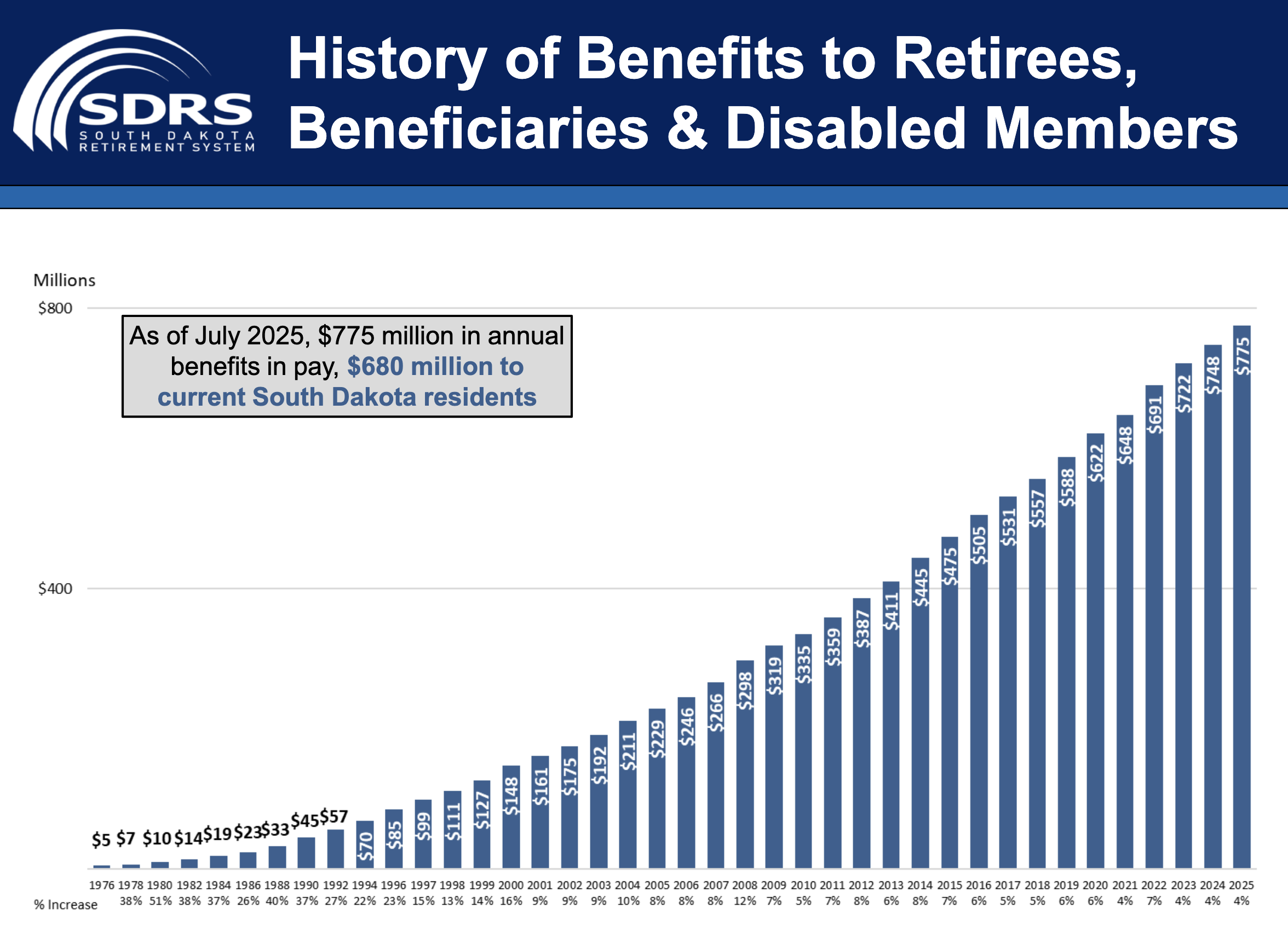
Those SDRS checks add up to $775 million a year, 88% of which goes to current South Dakota residents:
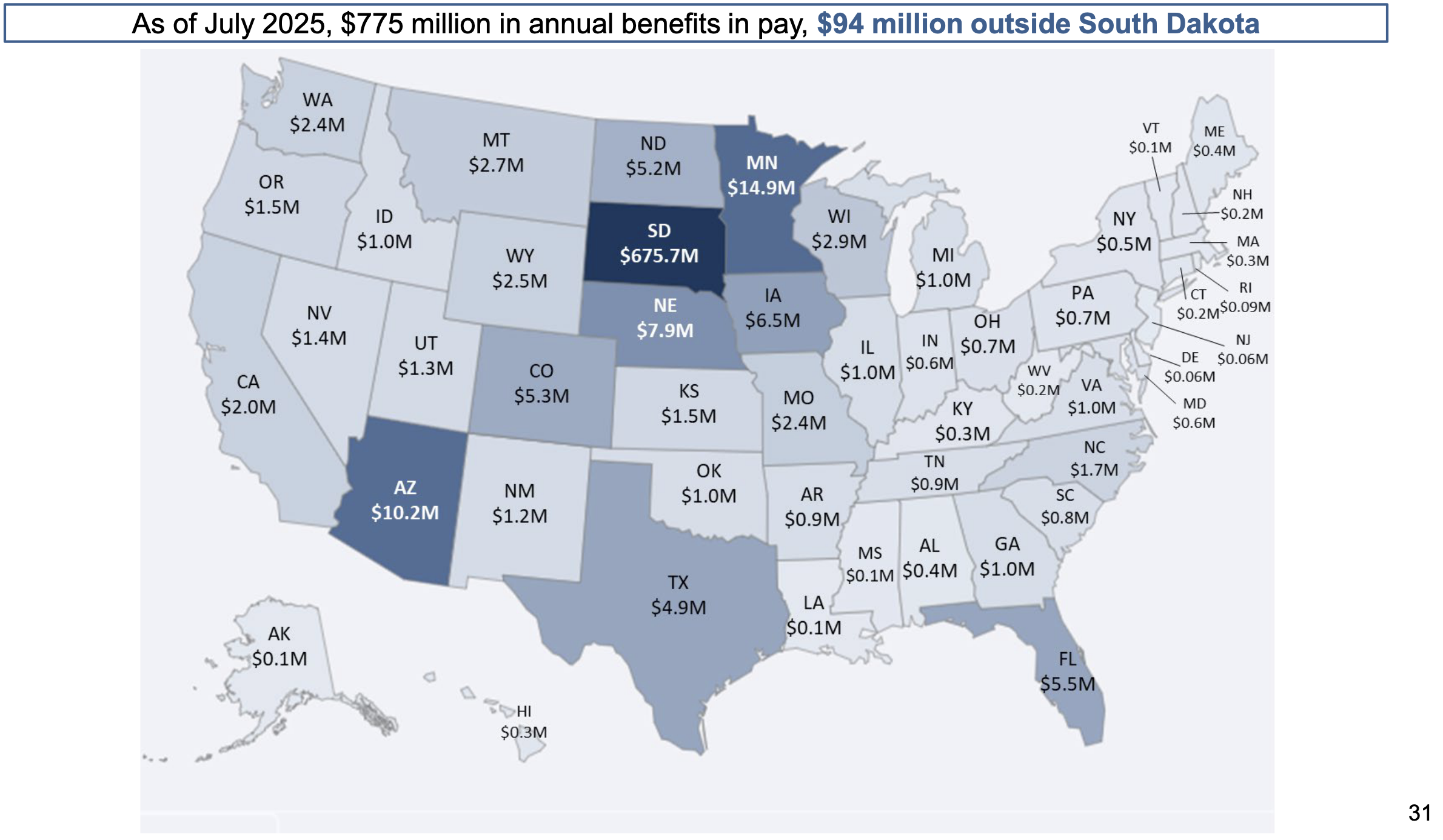
The state enjoying the biggest injection of SDRS dollars is Minnesota, followed by Arizona, Nebraska, and Iowa:
It still is a good system set up by the last Democratic governor of South Dakota. Delivers better than Social Security. What it needs is a normal economy and not an economy that is set up by an idiot who’s corporations have gone bankrupt six times.
The don always screws things up then saves people by giving them half of what they lost under him and claiming success. Its a most difficult con but its still a con job.
BTC ⤴️ 716% since 2020. Your investment would be worth about 7.16× more in USD terms. 
Also … a handful of U.S. states have invested public pension money in Bitcoin-related assets, though most do so indirectly (typically via Bitcoin ETFs or shares of companies that hold large amounts of Bitcoin) rather than buying BTC directly. 
Michigan
Wisconsin
California
Florida
N. Carolina
N. Jersey
Arizona
• Colorado
• Illinois
• Louisiana
• Maryland
• Texas
• Utah
A couple of takes by grudznick.
1) 2nd to the last Democrat fellow, Mr. Anderson.
2) Those two fellows who are 105 have really been raking in the moola all these years. Good for them. The legislatures should change it so lobbists and the senators can be in this program.
These people get free money for life. Raises are optional.
So, people I know, who worked very hard for the state, are living on their pensions and social security. MOST, are elderly, retired and working part time at Ace, Running, Homecare Services, and other local businesses. Perhaps 10-25 hours a week.
The COLA we get for 2026 averages out to $35 a month for both pensions and SS. MOST people’s supplemental insurance will rise $25 a month, and Medicare is $20 a month for part B and we haven’t even arrived to 2026 yet. Another year of getting behind unless one picks up extra hours or gets a raise.
And MOST of these people live paycheck to paycheck, no investments and no savings.
Yet they stay because they were born and raised here and assume it’s like this everywhere.
As a retiree and someone who collects from SDRS after 43 years of paying in is the extremely meager investment returns from SDRS investments especially in years of such positive increases in the stock market. If we cannot get an inflation increase in positive years, what is going to happen during the years of bear markets.