Last updated on 2026-01-22
Governor Larry Rhoden noted in his budget address yesterday that Medicaid has now overtaken K-12 as a share of the state general fund. But don’t blame Medicaid expansion:
Before the pandemic, our general fund budget grew 4% a year on average. After the pandemic craziness, that growth jumped to 10% a year. But a big cause was rising inflation, which meant we had to allocate more to building projects and provide more for the Big Three. That growth has not been equal across the board. If you look back to the start of the Noem-Rhoden Administration, Medicaid has grown far faster than any other area of the budget. In fact, for the first time in state history, Medicaid is a bigger share of the general fund than K-12 education. Well, why is that?
About half of it – $180 million – is increases in the rates that we pay to providers. Close to 30% of the total increase is in the state share of FMAP – more on that in a second. $45 million is from Medicaid Expansion, which is actually less than we originally thought. And the rest is Medicaid utilization [Gov. Larry Rhoden, budget address, 2025.12.02].
Back in 2022, Rhoden’s benefactress Kristi Noem urged South Dakotans to vote against expanding Medicaid by claiming it would cost the state $80 million. As one should expect, Kristi Noem was way off.
South Dakota’s Medicaid case loads increased after the coronavirus pandemic, before South Dakota expanded Medicaid. We thought Medicaid expansion could bring 42,500 new beneficiaries onto the rolls, and in 2023 the state budgeted for up to 52,000 new enrollees, but Rhoden’s proposed budget predicts the number of Medicaid expansion adults in Fiscal Year 2027 will be 30,367, the same as estimated for this budget year. With that level of participation in Medicaid expansion, total adult Medicaid case loads will match the peak they were at before expansion.
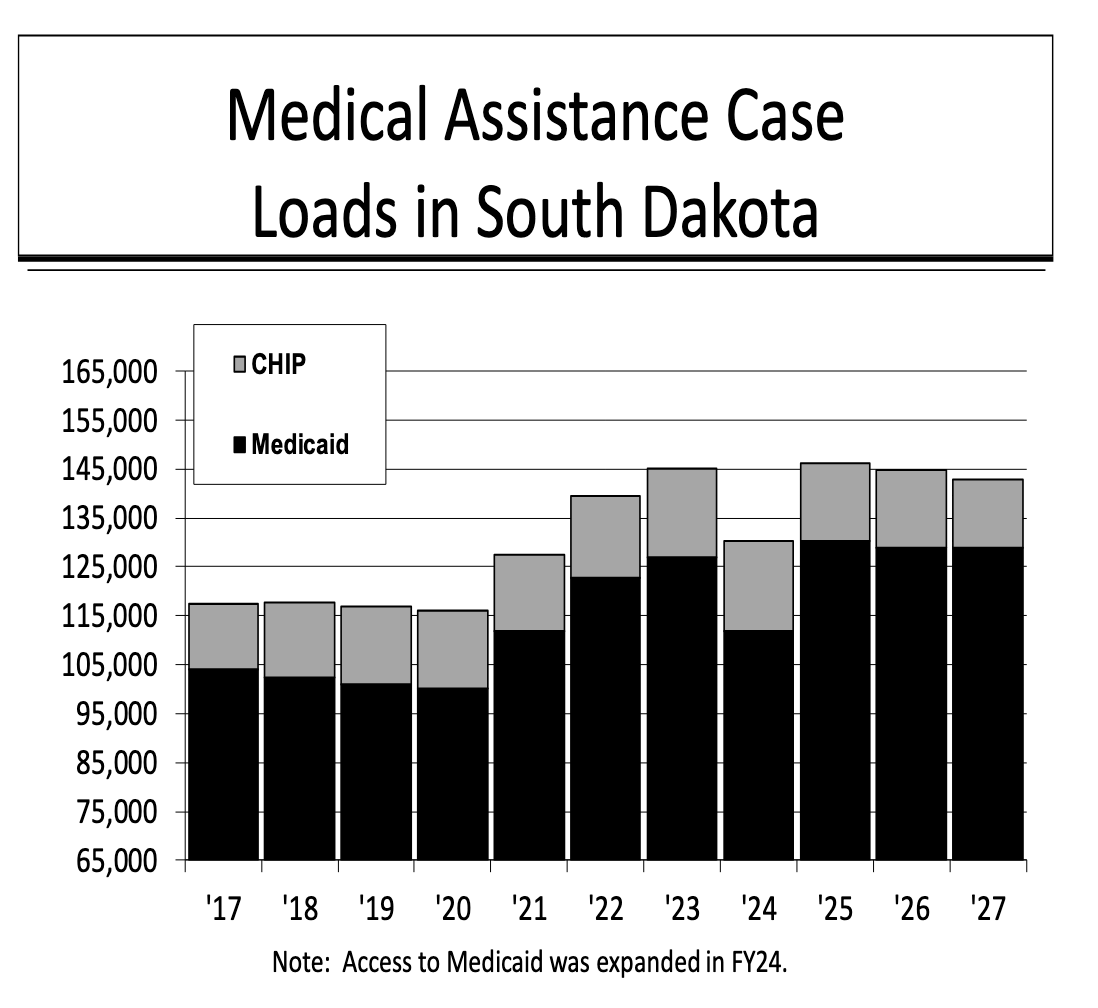
Medicaid expansion is costing us money, but not nearly as much as opponents of the Affordable Care Act direly and evidencelessly predicted. Medicaid expansion is a good investment in helping over 30,000 South Dakotans get health care so they can keep working and taking care of their families.
p.s.: Medicaid enrollment will likely drop when we implement King Don’s punitive work requirements, but a little note in the proposed FY2027 budget says that before we realize one pennywise/pound-foolish iota of savings, we have to spend $4.5 million—”$450,000 in general funds and $4,050,000 in federal fund expenditure authority to complete development work needed to implement Medicaid community engagement work requirements.”
Kristi goes here own way. She thanked President Trump for keeping Hurricanes away this year. That’s not BS….. That was at the last cabinet meeting! At the best she’s learned what you have to do to play Trump. She is the crony who also sent the plane of migrants to El Salvador against a judges order. She doesn’t worry about that she knows her mob boss will free her even if she was convicted of that crime.
Her lips are now so juiced they might explode. Need I go on? The reality is better than any comedy that could be written about the new West Wing.
There is a growing movement among Democrats and others to fund Medicare for all but I like the idea of rolling the funding for Obamacare, TriCare, Medicare, the Indian Health Service and the Veterans Health Administration together then offering Medicaid for all by increasing the estate tax, raising taxes on tobacco and adopting a carbon tax.
Yes, socialized agriculture, socialized dairies, socialized cheese, socialized livestock production, a socialized timber industry, socialized air service, socialized freight rail, a socialized nursing home industry, socialized water systems and now a socialized internet are all fine with Republicans in South Dakota but then they insist single-payer medical insurance is socialized medicine.
Medicaid expansion has had to have a positive impact on the financial viability of rural clinics and hospitals, which is a benefit to all of us. Even for people who do not live in rural areas, having access to emergency medical care is important if you are traveling through a rural area.