Sometimes I look at candidates’ arguments and wonder, “Who writes this stuff?” In Democratic U.S. Senate candidate Julian Beaudion’s case, the answer appears too often to be, not Julian Beaudion.
Back in January when Kristi Noem and Donald Trump murdered and slandered Alex Pretti, I noticed that Beaudion issued a meandering and less-than-heartfelt condemnation of those fascist killers. My review of Beaudion’s text and comparison to his independent opponent Brian Bengs’s cotemporaneous and more direct call for accountability and justice indicated that Beaudion’s response to the Minneapolis invasion lacked heart because it came from a source without heart, artificial intelligence.
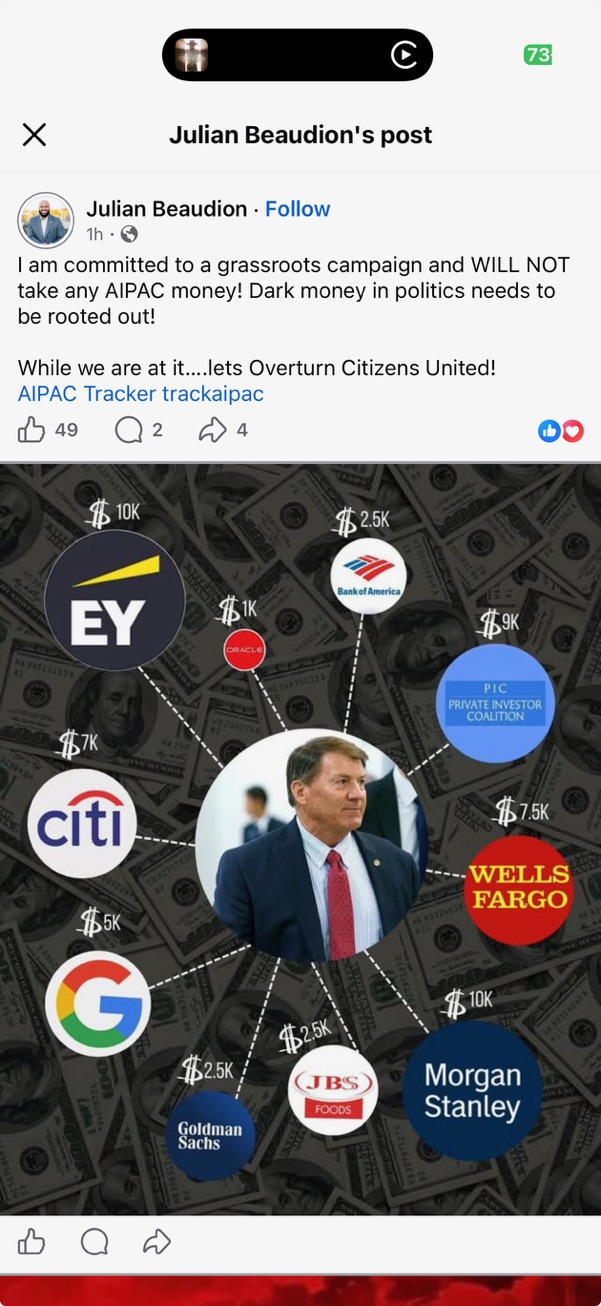
Then this month, Beaudion posted to Facebook his commitment to running a grassroots campaign and rejecting “dark money”. Beaudion specifically mentioned the American Israel Public Affairs Committee as a source from whom he would never take cash and hashtags AIPAC, but he appended a graphic showing thousands of dollars flowing not from AIPAC but from various corporations to the man he wants to replace, Republican Senator Mike Rounds:
Beaudion’s original post included two graphics; the second is cut off at the bottom of the above screen cap. Here’s the second graphic:
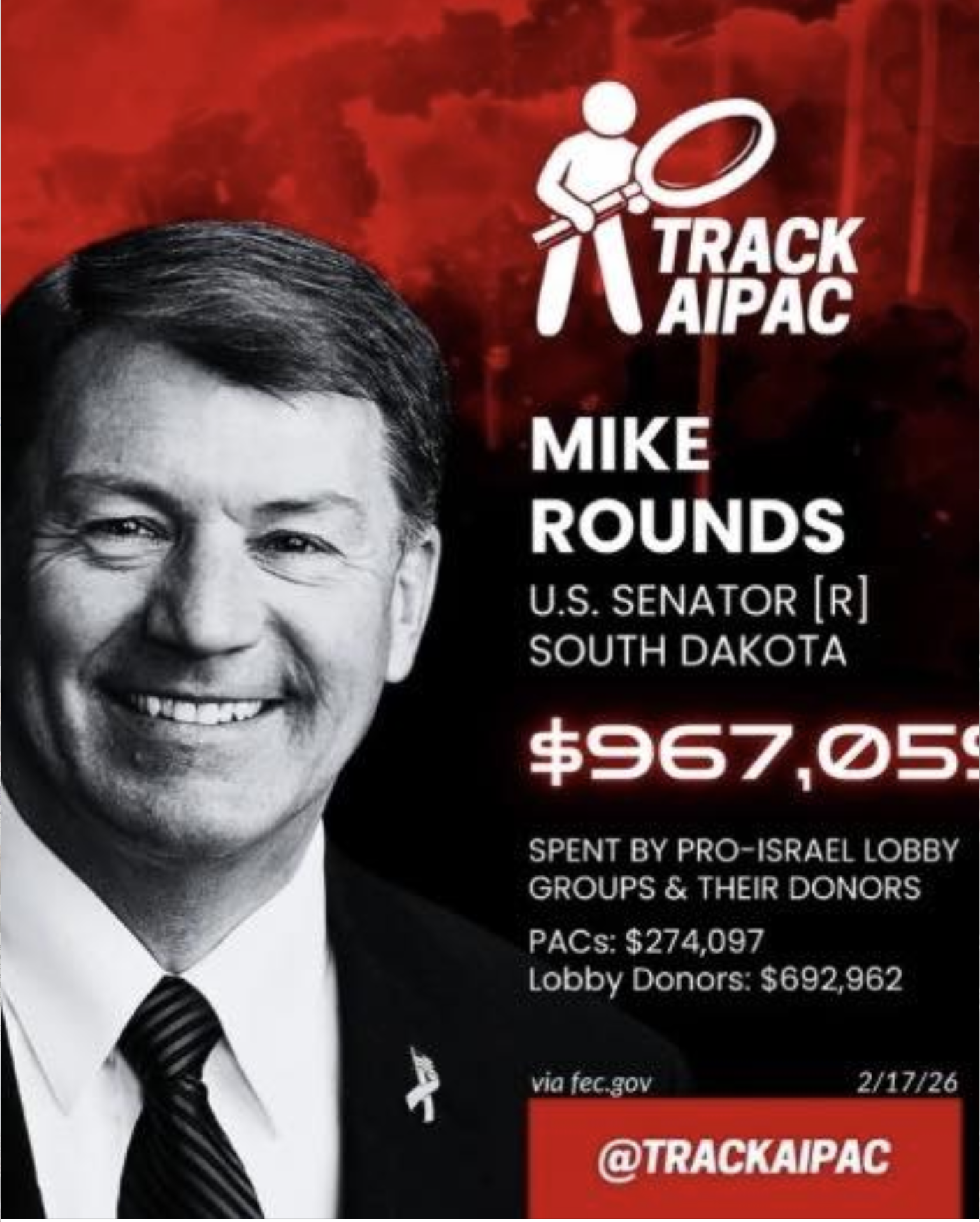
Note: the dollar figure isn’t cut off by my screen cap; Beaudion posted this Track AIPAC graphic as is, with the dollar figure cut off. That’s sloppy technical work by the campaign crew. And I’m not sure that a drive-by shot at Rounds’s popularity with folks who support Israel is the best tack in a red state whose electorate has shown little sign of signing on to the “Free Palestine” movement.
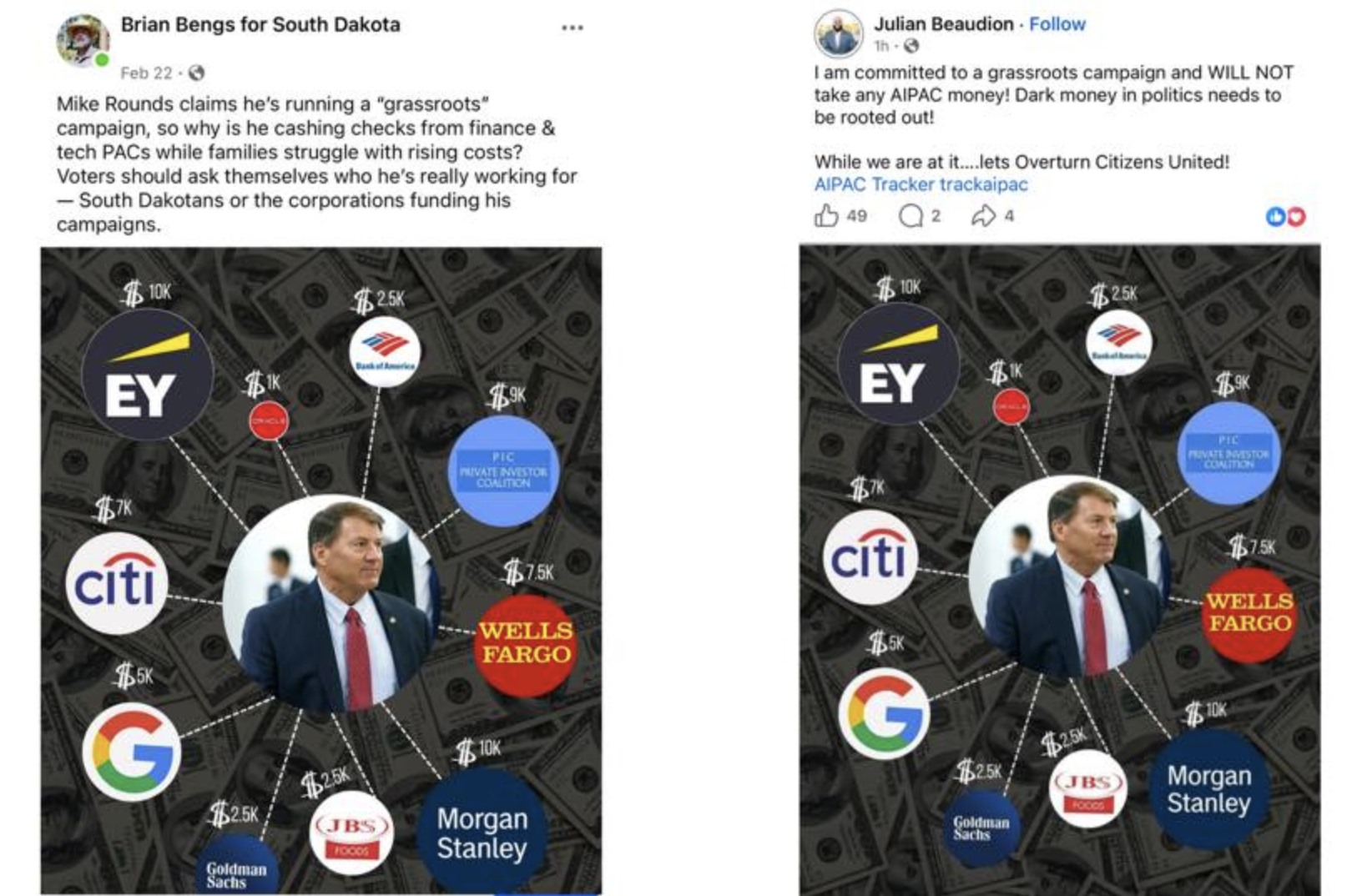
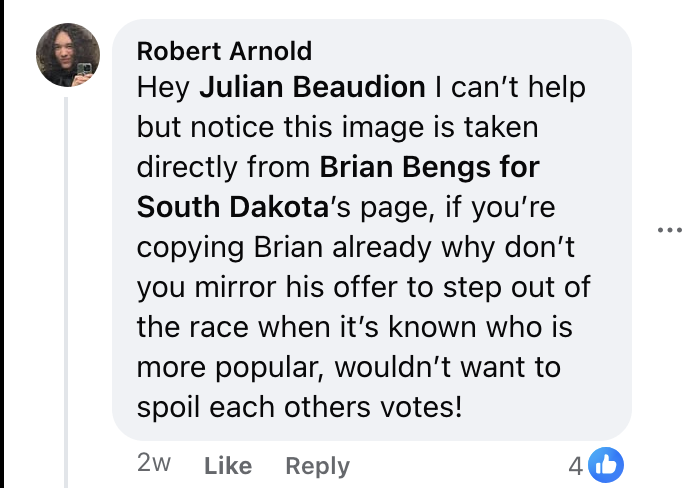
But the next day, failed Democratic candidate for governor Robert Arnold posted in the comments that Beaudion’s first graphic had a bigger problem: it appeared to come from Brian Bengs’s Senate campaign FB:
I click over and scroll down down down, and sure enough, there’s that exact graphic, posted by candidate Bengs on February 22, two and a half months before Beaudion posted it:
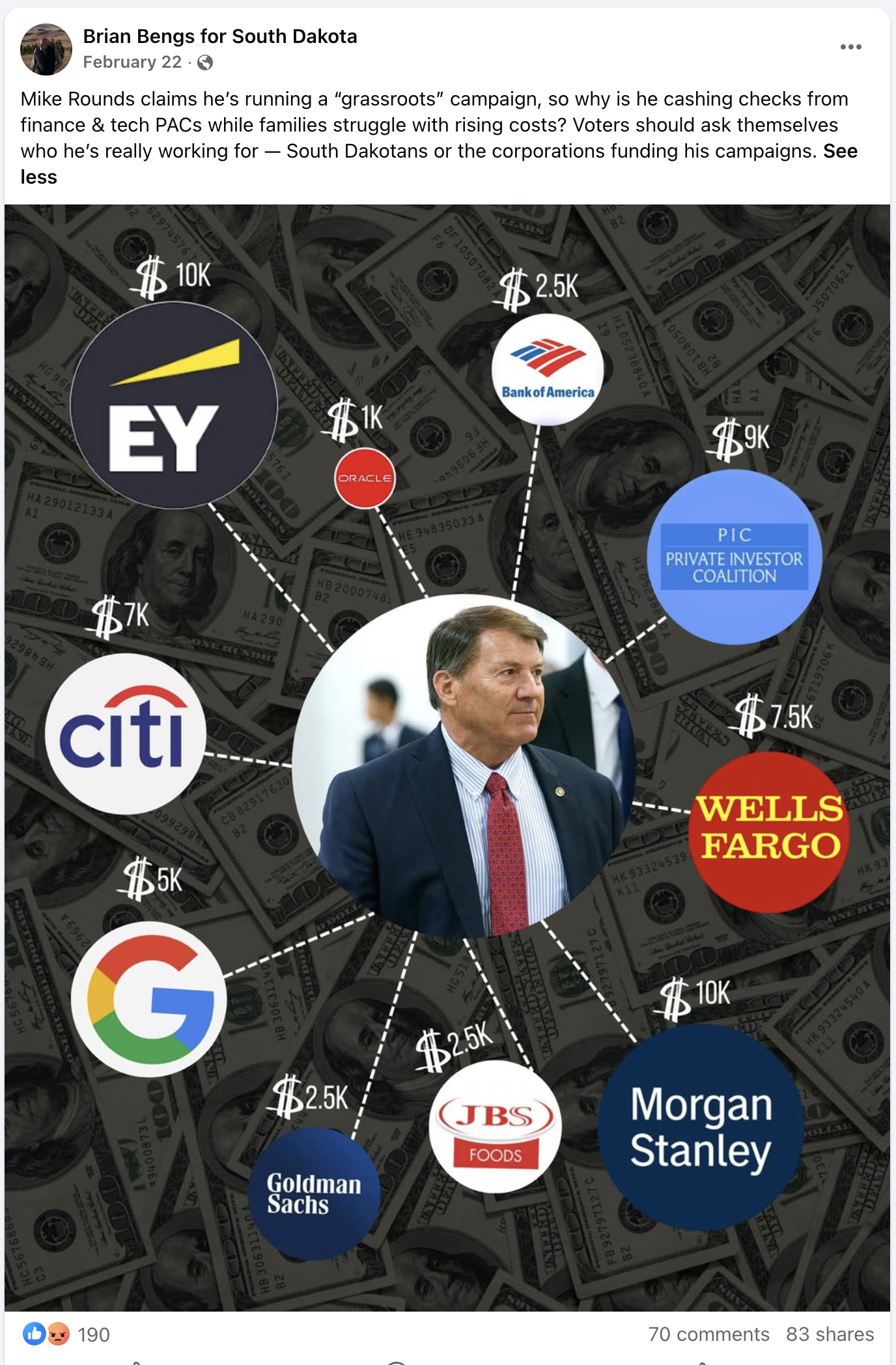
But Arnold uses his screen caps from both candidates’ pages to support his own devastating point: if Beaudion is just copying Bengs, why should voters bother with a copy? Why doesn’t Beaudion just step aside and let the original do the talking (and campaigning, and winning, and legislating)?
Beaudion did not credit the Bengs campaign for the graphic he apparently borrowed. In a reply to Arnold an hour later, Beaudion disclaimed knowledge of the original source and said someone just texted it to him:
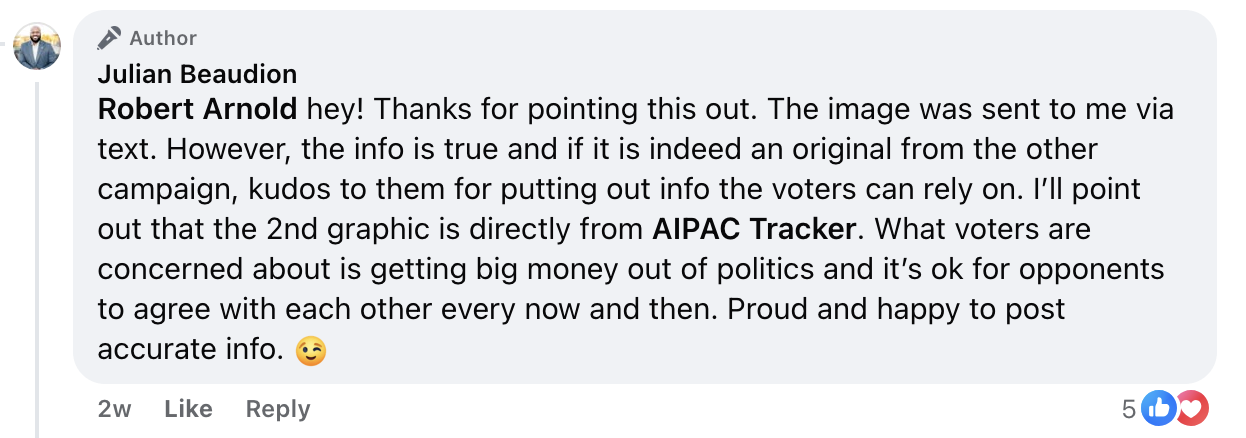
Hold on. As a candidate for United States Senate, you don’t just post to Facebook stuff people text you. A professional campaign vets material before putting it in ads and speeches and social media posts to verify facts and sources.
Beaudion suggests he checked the facts, but he still doesn’t know the source. I can affirm that, in less time than it would take to dig up the campaign finance reports and check each of the corporations named in the first graphic, I can drop the graphic and the phrase “Mike Rounds PAC” into Google IMage Search, and the first result I get is Brian Bengs’s Instagram post using that graphic again, apparently back in March.
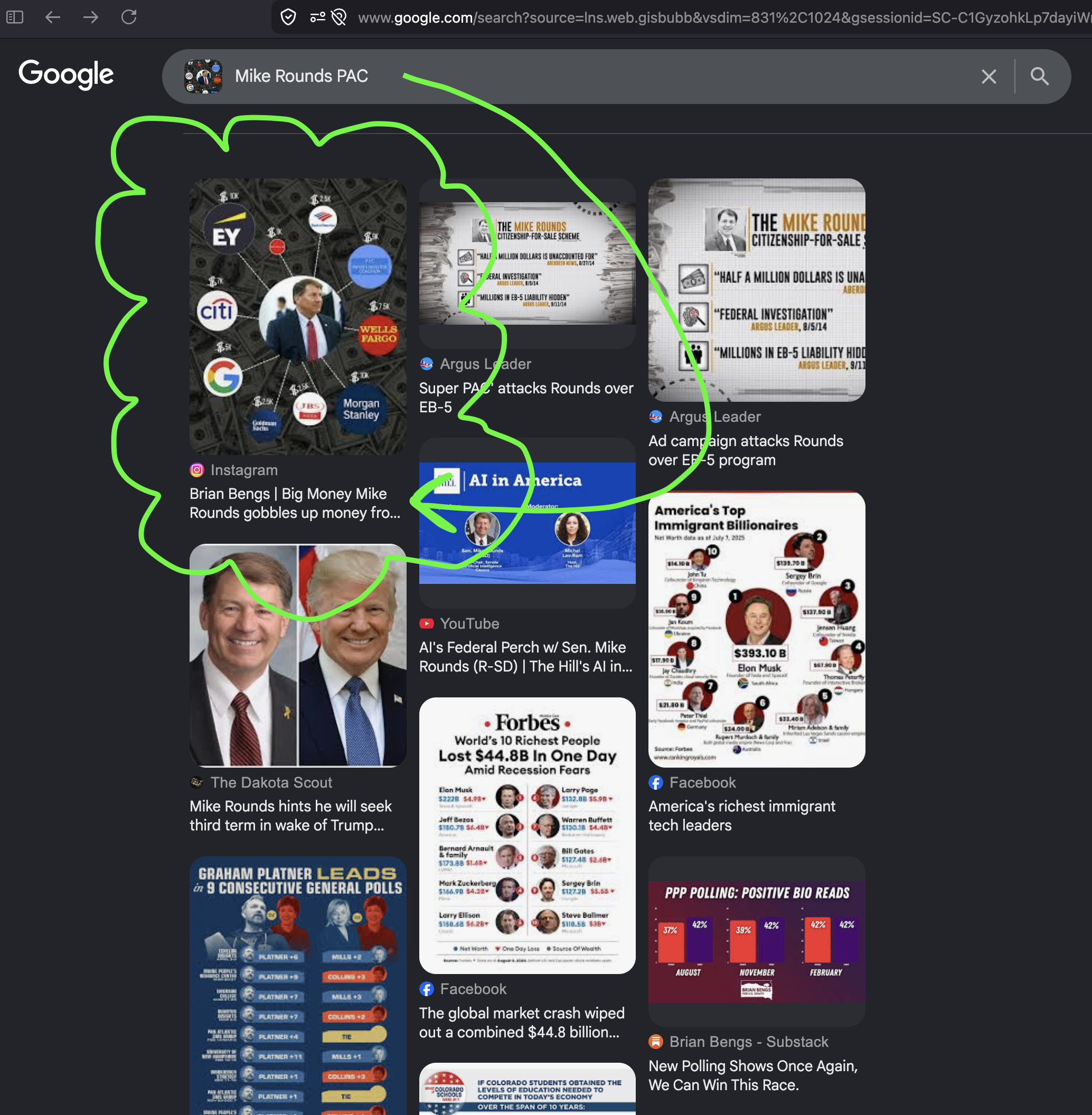
Beaudion’s use of Bengs’s material drew a couple more negative comments, and around breakfast on May 6, Beaudion removed the first graphic:
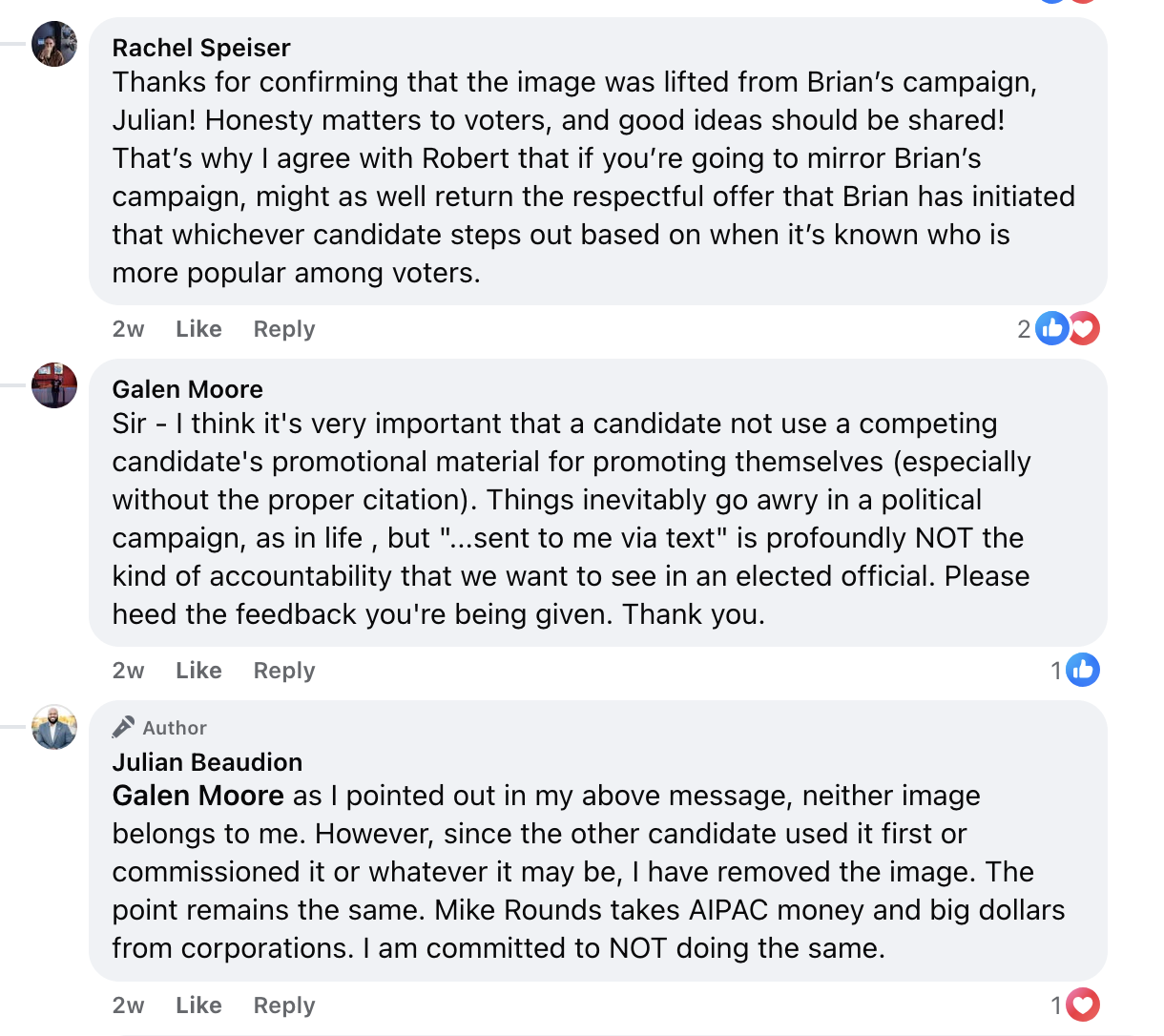
But there’s the point: when you support your point with information you haven’t checked, you fall into mistakes that drown out your intended point. Instead of talking about Senator Rounds’s beholdenness to big money and your grassroots integrity, people end up questioning your integrity.
Citing your sources is basic practice for everybody engaged in public discourse, from political figures to journalists to students just learning to use the First Amendment responsibly. Always tell people where you get your information, whether it’s your own research, your opponents, or ChatGPT. Not telling people your sources, human or artificial, is claiming as your own something that isn’t yours, which those of us who still care call plagiarism.
Give credit where credit is due, and speak in your own voice. If you can’t do those things, maybe you ought not run for public office.
So, who has the clout to ask Mr. Beaudion to suspend his campaign? Tom Daschle maybe?
There’s multiple instances across the country of the local Democratic party endorsing an independent candidate. The SDDems should do the same here.
I’m not sure Tom Daschle wields any clout on behalf of SD Dems nowadays. President Biden certainly won’t say anything on the issue Friday when he speaks at McGovern Day, nor should we expect him to, as he’s coming just as friendly party grandpa and most significant historical figure ever to address a McGovern Day Dinner.
Ben, I remain troubled that Democratic parties are having to endorse indies to dodge the GOP’s war on our brand. An effective party ought o be able to control its own branding and win on its own merits instead of having to hide its candidates under other labels.
But if the choice before us is to remove a Senator who abdicates his duty and facilitates the trampling of the Constitution or watch that quisling win another term as a weak, plagiarizing Democrat splits the opposition vote with a strong independent campaign, I’d tell the failing Democrat to either get much better at campaigning or get out of the way of the national interest.
Maybe offer Mr. Beaudion the nomination for state auditor or PUC at the convention?
You know it interesting. Times change. I spent years developing my own way of working. Its known as style. However my son works for one of the earliest proponents of style less artists. Its another way of being creative. I’ve done it for one work that all I did was develop the idea through a drawing. I did cut the colored acrylic parts out and install them but it wasn’t in the “style” of my work. It was an aluminum tower that looks like a giant flower. The lemmings love it and use it continously. It was made for the scientists, a revolving staircase they could sit in and watch the lemmings. The rules of plagiarizing are bad and everything you wrote about that is true but again, now with AI you will be able to say I’d like 25 per cent
Of one artist 50 per cent of another and just throw caution to the wind with the rest.
These are interesting times.
Lar, Mr. Beaudion should get the (D) nod as Treasury Secretary. He is as corrupt as that overgodder from the (R) party who came from out-of-state.
Shane, talk to him.
Mrs. Volesky, you are amongst the prettiest of ladies in this schebackle and your words carry great weight. You know grudznick is one of your biggest fans.